

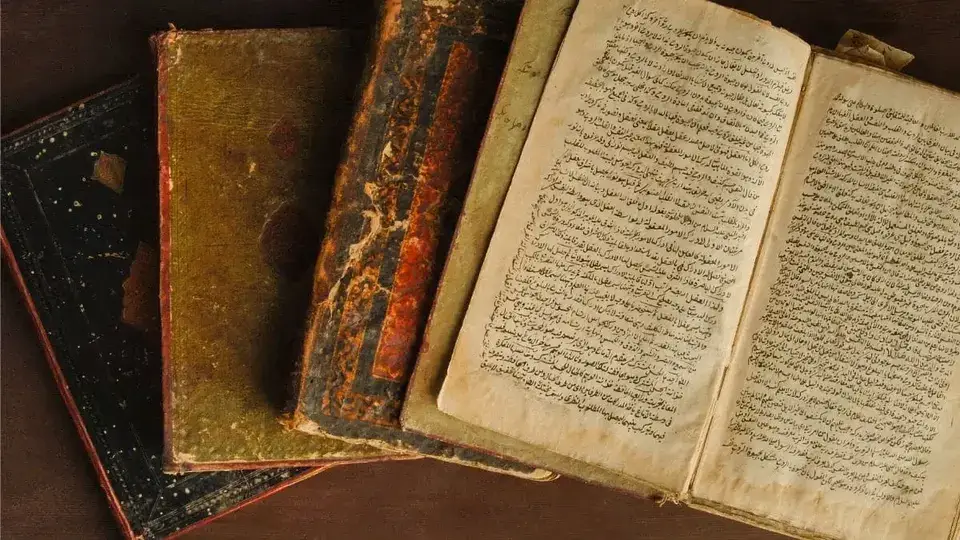
What is the Sunnah?
The word Sunnah is an Arabic term meaning “tradition” or “custom.” In Islamic terminology, it refers to the way of life of the Prophet Muhammad (peace and blessings be upon him). Muslims strive to follow his sayings, actions, and teachings.
In Islam, the Sunnah is defined as everything attributed to the Messenger of Allah (peace be upon him), whether in speech, action, or approval. It is considered one of the forms of divine revelation, second only to the Qur’an, as indicated in verses 3–4 of Surah An-Najm:
“Nor does he speak from [his own] desire. It is nothing but a revelation revealed.”
This highlights that the Prophet’s guidance is divinely inspired. The Sunnah is closely connected to the Qur’an, as it explains and clarifies it in many ways. This gives it great importance in Islamic law—for example, in explaining how to perform الصلاة, the number of its units, and its timings.
Meaning of Sunnah in English
In Islam, the Sunnah includes everything the Prophet Muhammad (peace be upon him) did in his daily life—such as how he ate, drank, slept, treated his wives, spoke, remained silent, traveled, and lived.
All of this has been preserved through the books of Sunnah and transmitted by scholars of Hadith, who carefully documented and conveyed the actions and teachings of the Prophet (peace be upon him) to later generations.

Perfumer of the year
Different expressions of the yearWe can express Al Sunnah attar in different ways, such as The Sunnahs and hadith because The sunnah is documented by hadith, according to classical Islamic theories. Hadith-based sunnahs comprises the prophet’s practice words, habits, and behaviors, as well as quiet endorsements. The term “sunnah” is also used in Islam to refer to optional religious responsibilities, such as-Sunnah prayers.
What does The Quran say about sunnah?
the Sunnah has a great position in Islam, it is the practical part of the Quran. It came to support its verses, revealing its ambiguities, clarifying its meanings, explaining its words, and clarifying its ambiguity. It also came with rulings that are not found in the Quran, and it was not stipulated in it, and they do not deviate from its rules and goals, so it cannot be dispensed with in any case, and that is because of its great importance In understanding Islam and working with it.
Sunnah Islam sometimes comes to For the confirmed verses from the Quran, for example, the hadiths about the obligation of prayer, zakat, fasting, and Hajj,
such as what our messenger Muhammed (PBUH), said in the hadith of Ibn Omar: (Islam is built on five testimonies that there is no Allah but Allah and that Muhammad is the Messenger of Allah, establishing on prayer and giving Zakat, Hajj and Ramadan fasting), Narrated by Al-Bukhari.
In Arabic:
(بني الإسلام على خمس شهادة أن لا إله إلا الله وأن محمدا رسول الله وإقام الصلاة وإيتاء الزكاة والحج وصوم رمضان)
، رواه البخاري.
Tafsir and hadith are confirmed by the Allah saying regarding prayer and zakat: “And be steadfast in prayer; practice regular charity; and bow down your heads with those who bow down”, (Al-Baqarah: 83), In Arabic:
“وَأَقِيمُوا الصَّلَاةَ وَآتُوا الزَّكَاةَ وَارْكَعُوا مَعَ الرَّاكِعِين”
And establish prayer, and pay the alms, and bow with those that bow, that is, pray with those who pray, our messenger Muhammad and his Companions: this was revealed concerning their religious scholars, who used to say to their kin from among the Muslims, ‘Stay firm upon the religion of our Messenger Muhammad, for it is the truth”.
And his saying about fasting: ” O you who believe! you are bound to observe fasting as those before you (- followers of the Prophets) were bound, so that you may guard against evil”, (Al-Baqarah: 183), In Arabic:
” يَا أَيُّهَا الَّذِينَ آمَنُوا كُتِبَ عَلَيْكُمُ الصِّيَامُ كَمَا كُتِبَ عَلَى الَّذِين مِنْ قَبْلِكُمْ لَعَلَّكُمْ تَتَّقُونَ”.
In Tafsir: ” O you who believe, prescribed for you, obligatory [for you], is the Fast, just as it was prescribed for those, communities, that were before you so that you might guard yourselves, against acts of disobedience, for, it [the fast] curbs the desires that prompt these [acts]”.
Al Sunnah may become to illustrate some of the verses of the Quran and sometimes comes with rulings over what is in the Quran, so it necessitates something that the Quran is silent about, or prohibits something that the Quran is silent about forbidding, and examples of this type are the hadiths that forbid the combination of a woman and her paternal aunt and a woman and her maternal aunt, and the prohibition of domestic donkeys, and everyone with fangs of wild beasts, and others of that.
Types of Sunnah
There are many types of Sunnahs, Al-Sunnah attar is divided into three categories as follows:
1- The first is the prophet’s words
It is called Sunnah Qauliyah/Hadith.
Sunnah Qauliyah and Hadith are closely related concepts in Islam. Here’s a breakdown of each:
Sunnah Qauliyah:
Literally translates to “prophetic way of speaking.”
Refers to the sayings and teachings of Prophet Muhammad (PBUH).
These sayings can cover various topics like:
Beliefs (Aqidah)
Religious practices (Sharia)
Moral conduct (Akhlaq)
Sunnah Qauliyah is considered the first and most important type of Sunnah (practice/tradition of the Prophet).
Hadith:
2- The second is Sunnah Al Filiyya
which refers to the prophet’s conduct.
Sunnah al-Fiiliyya refers to the actions of Prophet Muhammad (PBUH). These actions encompass both his religious practices and his daily routines. They serve as a model for Muslims in various aspects of life.
Here’s a breakdown of Sunnah al-Fiiliyya:
- Religious Practices: This includes how the Prophet performed prayers, fasting, pilgrimage, and other rituals. By observing his actions, Muslims gain a clearer understanding of how to fulfill their religious obligations.
- Daily Routines: This encompasses the Prophet’s everyday habits, such as his manner of eating, sleeping, dressing, and interacting with others. These seemingly mundane actions can offer guidance on how to live a balanced and ethical life.
The importance of Sunnah al-Fiiliyya lies in the belief that the Prophet’s actions were divinely inspired and reflected the ideal way to live according to Islam. However, it’s important to note that some of these actions might be specific to the context of his time and place.
Here’s a comparison of Sunnah al-Fiiliyya with other types of Sunnah:
- Sunnah Qawliyyah: The sayings and teachings of the Prophet.
- Sunnah Taqririyyah: The approvals or tacit endorsements given by the Prophet to the actions of his companions.
Understanding Sunnah al-Fiiliyya requires consulting reliable Hadith collections, which often categorize narrations based on whether they describe the Prophet’s sayings (Qawliyyah) or actions (Fiiliyyah). Islamic scholars also employ methods to determine the authenticity and applicability of these narrated actions in the present day.
3- The third category of Sunnah is Sunnah Taqririyyah:
which refers to activities that were prevalent during our prophet Muhammad’s time and which he did not oppose.
There are other classifications of The Sunnah, Sunnah Islam in Sharia could be divided into confirmed and unconfirmed Sunnahs, The confirmed Sunnah which we talked about before we performed after the fard.
The Unconfirmed Sunnah, such as 4 Rakat after Asr, and 4 Rakat after Isha. In Ramadan, there are two sunnah we can perform there at night, salat Al Tahajjud and salat Al Tarawih.
Sunnah Taqririyyah is the third type of Sunnah, alongside Sunnah Qawliyyah (sayings) and Sunnah Fiiliyyah (actions). It refers to the approvals or tacit endorsements given by Prophet Muhammad (PBUH) to the actions of his companions.
Here’s a deeper look at Sunnah Taqririyyah:
Meaning: “Taqririyyah” translates to “confirmation” or “approval.” In this context, it signifies the Prophet’s silent acceptance of the actions done by his companions in his presence.
How it Works: There are two main ways Sunnah Taqririyyah is established:
Silence without Disapproval: If the Prophet witnessed a companion acting and did not object to it, it can be understood as his tacit approval.
Positive Response: Sometimes, the Prophet might even express pleasure or smile upon witnessing a companion’s action, further signifying his endorsement.
Importance: Sunnah Taqririyyah helps establish certain practices as Islamically permissible or even commendable. It provides additional guidance beyond the Quran and explicit sayings of the Prophet.
Salat Al Tarawih
During Ramadan, salat Al Tarawih is a sunna in Islam muakadah night prayer, masjid sunnah, that is exclusively performed during the fasting month of Ramadan. It doesn’t matter if you perform it alone, in a group, at home, or a mosque, or in another public gathering place. Traditionally, we can practice Al Tarawih as a group, usually among extended family members in a single large house. Others may gather in a masjid, a community center, or even an open field. Depending on his country, men only or men and women may do the Tarawih prayers in the mosque (although physically separated from each other). Salat Al Tarawih has a total of twenty Rakat. our prophet Muhammad was concerned about this.
Salat Al Tahajjud
is performed at night time, The Tahajjud prayers are held in the interval between the isha and fajr prayers. There is a minimum of one Rakat and a maximum of eleven Rakat in the Tahajjud prayer. Some claim 13, however, any number greater than 13 is considered an invention.
List of Sunnah
Our Prophet Muhammad is our ideal and our first teacher, from him, we learn how to worship Allah and from him, we learn how to live our lives according to what Allah has imposed on us from the legislation. Allah Almighty commanded us to obey Him and follow His Sunnahs to obtain a high position in Paradise and obtain many good deeds. These Sunnahs are many, including:
- When we wake up from sleep to perform the dawn prayer, we praise God, and it is also nice to follow the Sunna of the Messenger Muhammad and say the dua of waking up from sleep:
اَلْحَمْدُ لِلَّهِ الَّذي أَحْيَانَا بَعْدَ مَا أَمَاتَنَا وَإِلَيْهِ النُّشُورُ
“Alhamdu Lillahil-Lathee Ahyana BaAAda Ma Amatana Wa-Ilayhin-Nushoor.”
English translation: All praise is for Allah who gave us life after having taken it from us and unto Him is the resurrection.
-
Say Bismillah when you start doing something new, such as eating, drinking, or sleeping.
When you want to eat, say in the name of Allah so that Shaytan will not share your food with you.
-
Read the last two verses of Surat Al-Baqarah when you are going to sleep, if you say them they will protect you until you wake up from the shaytan.
Sunnah Vs Hadith
We can express the Sunnah with hadith because the hadith men wrote down Al Sunnah atter in their books and we have had the knowledge of hadith that was concerned with explaining everything that happened in the era of the Messenger, may Allah’s prayers and peace be upon him, and this science was concerned with clarifying the correct and weak hadiths.
We can say that the hadith is the great encyclopedia that we can rely on to know the Sunnah and to know the conditions of the Messenger and the conditions of the Companions. We can know a lot about the invasions and conquests and how Islam spread, how the Messenger called the infidels to Islam, and did they responded or not.
How did the Prophet deal with the Companions and how did he teach them the teachings of Islam?
We can say with confidence that the hadith is Al Sunnah attar or expressive.
Fard vs sunnah
In Islam, praying is regarded as the highest form of worship and the most effective manner of proving Allah’s service. In Islam, distinct prayers are associated with a set of unique laws and regulations, such as timings, frequency, and orientation. Muslims can use these prayers to convey their love, respect, and appreciation to Allah, the Almighty.
In Islam, there are four types of prayers:
- Fard (obligatory prayers).
- Wajib (mandatory prayers).
- Sunnah.
- And Nafl (voluntary prayers).
Every Muslim is required to perform fard, or mandatory prayer, Every day. Men must perform mandatory prayers in the masjid, women no. Muslims are obligated to do five mandatory prayers. Failure to observe these prayers daily might result in a person being labeled a sinner or a non-Muslim.
The following are the five required prayers: Salat al-Fajr, Salat al-Zuhr, Salat al-Asr, Salat al-Maghrib, and Salat al-Isha.
sunnah Islam is an elective salat. We perform it after fard and we will enumerate sunnah prayers after each salat. our prophet performed it and we took it from him. A man who does it becomes in a high position and his reward increases.
Sunnah Prayers
sunnah Islam is an optional or supererogatory salat, that can be offered in addition to the five daily salat that all Muslims must conduct, which are Offered by our Prophet Muhammad (PBUH), In addition to the mandatory prayers, Sunnah prayers are required. All jurists consider it obligatory to do Sunnah prayers, and failing to do so on purpose is punishable. Some are performed at the same time as the five daily mandatory prayers, while others are performed just at specific times. The length of a Sunnah prayer varies as well.
Sunnah prayers include:
- 2 Rakat before Fajr.
- 2/4 Rakat before Zuhr and 2 after.
- 2/4 Rakat prior to Asr.
- 2 Rakat following Maghrib.
- 2 Rakat following Isha’a.
Ahlus Sunnah Wal Jamaah Meaning
Ahlus Sunnah wal jamaah is the largest Islamic religious group of Muslims in most periods of the history of Islam, and the majority of Muslims belong to them. The people of opinion and the people of hadith, and those who followed their path and traced their trail and took from them their method through transmission and continuous chain of transmission.
This label was not a common term at the beginning of Islamic history, as there was no division. Rather, this label appeared gradually due to the emergence of sects splintering from the Muslim community under different names. This means that each one follows prophet Muhammed and his sunnah and follows the opinions of sharia scholars from Ahlus sunnah wal jamaah.
Importance of Sunnah?
We cannot dispense with Al Sunnah attar and be satisfied with the Quran because The Quran included ambiguities that must be clarified, and it included summaries that must be detailed and included generalities that were specified in the prophetic sunnah, and issues came about its release, and the sunnah came to limit it, as you can’t dispense with the teacher and be satisfied with the book. our prophet Muhammed is our teacher and we take his instructions from sunnah Islam.
sunnah Islam is important to us to understand Islam and its instructions. If we follow the sunnah, we will get a good award and maybe a good
position in heaven.
Do you want your kids to learn more about Sunnah Islam? Sign up for Quran Oasis’s Islamic Studies Classes program and watch them dive deeper into the Quran science and learn the Holy Book of Allah.
Quran Oasis’s online Arabic classes for kids, Quran classes for adults and let your children learn the accurate Quran recitation and word pronunciation even if Arabic is not their first language.
Quran teaching for children in Quran Oasis is fun as well as structured, they’ll learn with eLearning Quran;
Our Quran teacher, Arabic teacher, Islamic Studies teacher, and tajweed teacher, ( House of Quran ) will be their friends during this amazing journey.
Online Quran tuition learning can be challenging if you’re seeking it for your kids. Quran Oasis offers you a wide variety of topics to teach your children online.
Quran Oasis’s experienced live tutor ( male teacher & female teacher ). They have many years of experience in Teaching Arabic online and the Quran online to non-Arabic speakers.

