

Teaching Arabic Grammar to Children Step by Step
Arabic grammar is the system that organizes the Arabic language and is known as “Nahw” (grammar). It is considered one of the most important linguistic sciences in history. It was first established during the era of Ali ibn Abi Talib by Abu al‑Aswad al‑Du’ali, who laid down the foundational rules of the Arabic language to regulate and preserve it. This effort became especially important after many non-Arabic speakers entered Islam and linguistic mistakes began appearing during the recitation of the Quran.
It is very important to teach Arabic grammar to children step by step from an early age so that they can practice it naturally and become accustomed to reciting the Quran and understanding it properly. There are many ways to teach Arabic grammar to children gradually, such as online courses and attending educational lectures. It is also recommended to enroll children in an online Arabic grammar course designed for kids so they can begin learning the rules of the language through images and worksheets.
The importance of learning Arabic grammar comes from the fact that Arabic is the language of the Quran and the Sunnah, and it is the language of the sources of Islamic legislation.
In addition, Islamic prayers and many acts of worship require recitation in Arabic.
Arabic is also considered a timeless language that is unlikely to disappear, according to linguistic studies about the survival of languages in the future conducted by University of Birmingham.
The Arabic alphabet consists of twenty-eight written letters, although some scholars include the hamza as a separate letter, making the total twenty-nine letters.
Arabic is written from right to left, similar to Hebrew and Persian, unlike many other languages around the world.
What Are the Basic Rules of Arabic Grammar?
Ancient Arabs spoke Arabic fluently without needing formal grammatical rules to regulate their language. They left behind a rich linguistic heritage, especially in poetry written with highly eloquent expressions.
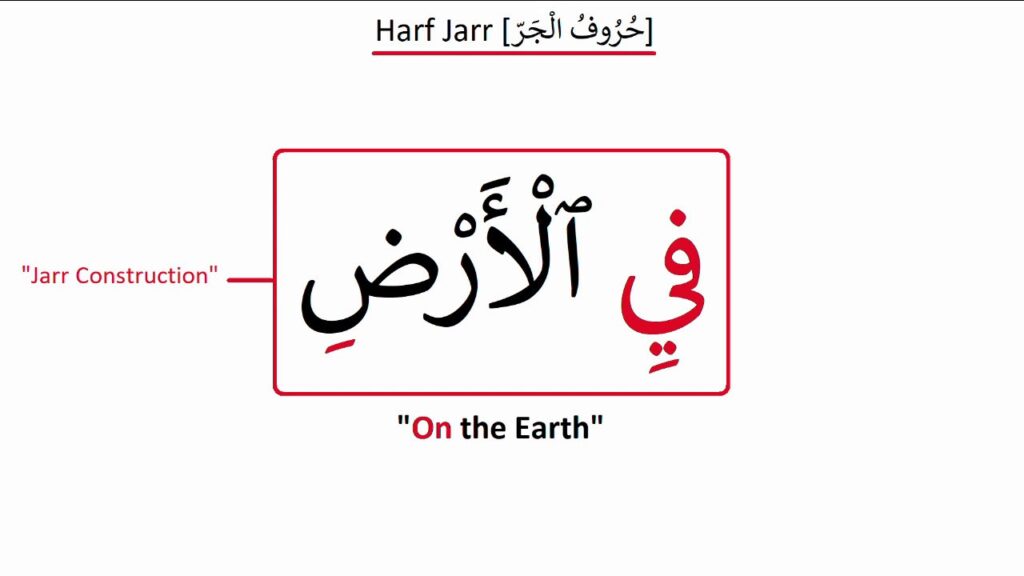
Students often find it very difficult to absorb and understand the rules and fundamentals of the Arabic language. This is due to its complexity, the variety of grammatical cases, and the rules of inflection that may differ from one word to another. As a result, learning Arabic grammar (Nahw) can seem challenging for learners compared to many other languages.
Ultimately, whether Arabic is considered easy or difficult largely depends on the way you approach the learning process and the method you use to study it.
How Can You Learn Arabic Grammar?
Learning Arabic grammar may seem like one of the most difficult and tedious parts when beginning to study the language. However, as you progress, you will notice that Arabic becomes an enjoyable language to learn and one of the richest languages in the world in terms of linguistic content.
To begin learning Arabic, you should know that the word is the main component of a sentence, and it is divided into three categories:
Noun
A noun refers to a person, place, event, object, plant, or animal.
Verb
A verb indicates an action or event. It is divided into:
-
Present tense verb, which refers to an action happening now.
-
Past tense verb, which indicates an action that occurred and finished before the time of speaking.
-
Imperative verb, which expresses a command.
Particle
A particle functions as a connector between two subjects, two verbs, or between a subject and a verb.
In Arabic, speech is made up of several sentences that connect together to form a meaningful idea. Sentences can be divided into two main types:
Nominal Sentence
A nominal sentence begins with a noun and consists of two main parts:
-
The subject (Mubtada), which starts the sentence.
-
The predicate (Khabar), which completes the meaning of the sentence.
If either of these elements is missing, the sentence becomes incomplete.
Verbal Sentence
A verbal sentence begins with a verb and typically consists of a verb and a subject.
The type of verb depends on the time in which the action occurs:
-
If the action occurred and finished in the past, it is a past tense verb.
-
If it occurs in the present, it is a present tense verb.
-
If it indicates a request or command, it is an imperative verb.
Take the First Step — Learn the Quran from the Comfort of Your Home
What Is the Easiest Way to Learn Arabic Grammar?
There are several methods that can help you learn Arabic grammar easily and within a short period of time.
1. Start with the basics
No matter which language you are learning, always begin with the fundamentals. If you lack sufficient knowledge about the learning process, it is best to seek help from an experienced teacher.
2. Use an Arabic dictionary
Dictionaries provide grammatical information about words, making the entire learning process easier, more convenient, and more enjoyable.
3. Immerse yourself in practice
It is important to practice as much as possible when learning any new language.
To make learning Arabic grammar easier, you should see it, hear it, write it, and pronounce it. Combining these different methods makes the learning process more effective.
4. Never stop learning
It is easy to decide to start learning Arabic grammar, but the key is to continue learning until you master the language.
How Can I Learn Arabic Grammar Online?
Why is it important to learn Arabic grammar online and encourage your children to study it?
Many parts of the Quran can be difficult to fully understand—such as commands, stories of the prophets, and matters of the unseen. Imagine not understanding what Allah intended in these verses. This is why learning Arabic grammar is extremely important.
The internet now offers many online Arabic grammar classes that make learning Arabic grammar for children easier step by step.
First, choose an Arabic grammar course that suits your children’s needs and fits your available time.
Then select a teacher who can explain the lessons clearly and effectively.
After that, begin with the basics and attend grammar lessons regularly while encouraging your child to practice consistently.
Finally, combine speaking, listening, and writing together to make the learning process more effective for your children.
Quran Oasis offers a high-quality online Arabic grammar course that focuses on effective learning and helps students understand Arabic grammar rules clearly.
Would you like your children to learn more about online Quran lessons?
Enroll them in the Quran Oasis program and watch them deepen their understanding of the Quran while learning the words of Allah.
Quran Oasis provides online Arabic lessons for children and Quran classes for adults, helping children learn to recite the Quran accurately and pronounce its words correctly even if Arabic is not their first language.
Teaching the Quran to children at Quran Oasis is both enjoyable and well organized. Through the online Quran learning program, children will study with teachers of Quran, Arabic language, Islamic studies, and Tajweed, who will guide them throughout this wonderful learning journey.
Learning the Quran online can sometimes seem challenging when you are searching for the best program for your children. Quran Oasis offers a variety of subjects designed specifically to teach children online.
Experienced teachers at Quran Oasis—both male and female—have extensive experience teaching Arabic and the Quran online to non-native speakers.
Whether you are looking for online Quran lessons, Arabic language courses, Tajweed, Ijazah certification, Tafsir, Qira’at, or Islamic studies, Quran Oasis provides professional Quran teachers ready to guide your children with engaging lessons and a well-structured learning system.
Quran Oasis gives you and your children the opportunity to learn with the verses of the Quran, which become companions in their learning journey and motivate them to continue learning.
Quran Oasis (Online Quran Institute) is one of the best online classrooms for learning the Quran.
Summary
The Arabic language—often called the “Language of the Letter Ḍād”—is one of the most widely spoken languages in the Arab world and in several other countries such as Turkey, Mali, Chad, Senegal, Ethiopia, and Iran.
It is also one of the six official languages of the United Nations, and the World Arabic Language Day is celebrated on December 18 every year.
Arabic is considered a sacred language because it is the language of the Quran, and many acts of worship in Islam are performed in Arabic.
Additionally, Arabic is a fundamental component of Arab identity and has played an important role in preserving the unity of the Arab world.
You should remember that languages only become “easy” or “difficult” depending on the time frame you set for learning them. The process becomes much easier when you enjoy your progress and maintain realistic expectations.
In the end, we do not merely learn languages—we acquire them.

