

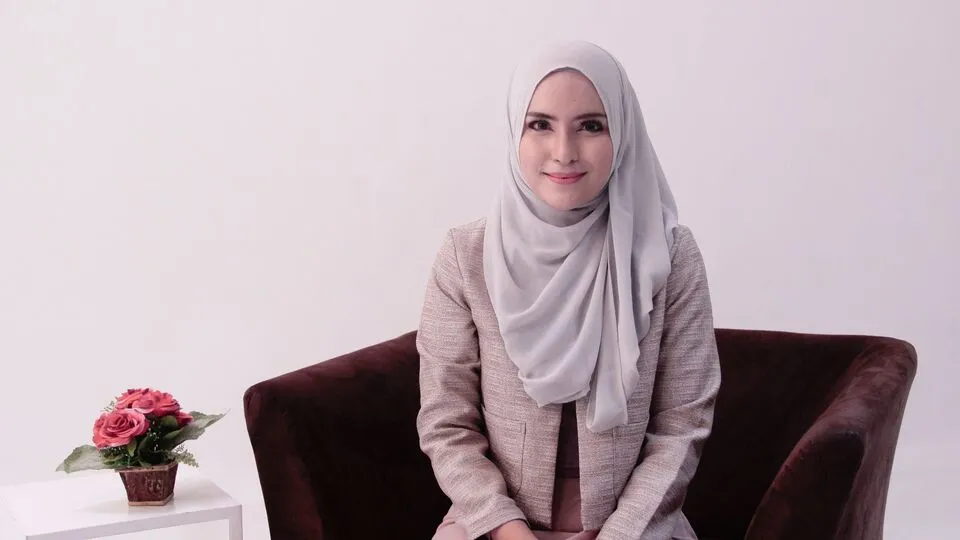
Muslims wear the hijab primarily as a symbol of obedience to God. For Muslim women, the hijab represents a badge of honor and a commitment to their faith. While there are many reasons for wearing the hijab in Islam, the most important is obedience to God’s command.
In Muslim societies, the hijab also reflects societal values, promotes modesty and a woman’s esteemed position, and fosters an environment of honor and respect for women.
In the following sections, we will define the hijab and explore its various aspects and significance in Islam.
Definition of the Hijab
In Arabic, the word hijab means something that covers or conceals something that cannot be seen or accessed. A Muslim woman’s hijab is the garment that covers her entire body except for her face and hands.

Some Islamophobes and Islamophobes claim that Muslims created the hijab to possess women, but in reality, Islam was not the first religion to include the hijab as one of its tenets. Christianity and many other cultures also have hijabs as a form of dress for women.
What is the hijab?
The hijab is a covering for a woman’s entire body except for her face and hands, which are considered her private parts (awrah). These parts must be covered when a woman is in the presence of non-related men and when she is performing prayers.
While the hijab is important for a woman’s modesty and protection, wearing it is also a sign of obedience to God. Even if there is no other reason for wearing the hijab, a Muslim woman will wear it seeking God’s pleasure and approval.
Women are precious jewels in Islam, and Islam has been keen to protect them not only by covering their bodies but also by establishing laws that safeguard their rights in all aspects of life.
What is the concept of the hijab in Islam?
Non-Muslims may think that the hijab is merely a garment, but in reality, it is a garment of deep faith and a sign of obedience. Islamic teachings call for the spread of chastity and modesty, and the Muslim woman has a special status in Islamic society. She is the precious jewel, and the hijab was imposed to protect her and to protect society from corruption and prostitution.

Certainly, there are many veiled women who do not represent Islam well, but this does not mean that the concept of hijab itself is flawed; rather, it is flawed in how we practice and live our lives.
The Surahs that mention hijab in the Quran
Hijab in the Holy Quran is found in Surah Al-Ahzab, verses 53 and 59:
1- (And when you ask [his wives] for something, ask them from behind a screen. That is purer for your hearts and their hearts.) 53
This means that if you speak to a non-related woman, you should not look at her. This means that a woman should cover her body to protect it, and this will protect the hearts of both men and women.
2- (O Prophet, tell your wives and your daughters and the women of the believers to draw their outer garments close around themselves [when they go out]. That is more suitable so that they will be recognized and not be abused. And ever is Allah Forgiving and Merciful.) 59
This is a direct command for Muslim women to wear hijab.
3- The third is in Surah An-Nur, verse 31:
(And tell the believing women to lower their gaze and guard their private parts and not expose their adornment except that which [necessarily] appears thereof and to draw their headcovers over their bosoms and not expose their adornment except to their husbands, their fathers, their husbands’ fathers, their sons, their husbands’ sons, their brothers, their brothers’ sons, their sisters’ sons, their women, those whom their right hands possess, or male attendants having no physical desire, or children who are not yet aware of the private aspects of women.) 31
In this verse, God clarifies who is permitted to see a woman without her hijab.
What does the hadith say about hijab?
Abu Dawud narrated this hadith: Asma’ bint Abi Bakr entered upon the Messenger of God, peace and blessings be upon him, wearing a hijab. The Messenger of God, peace and blessings be upon him, recognized her and said:
“O Asma’, when a woman menstruates, it is not permissible for anything to be seen of her except this and this,” pointing to his face and hands.
Here, the Prophet (peace and blessings be upon him) clarified two matters regarding the hijab: when a woman must wear it after menstruation, and how to wear it, ensuring it covers her entire body except for her face and hands.
Why does a woman wear the hijab?
The obligation of the hijab is mentioned in the Quran and Sunnah in numerous verses and hadiths. We will now mention some of them to illustrate the most important reasons for wearing the hijab:
1- God’s Command:
As God says in Surah An-Nur, verse 31:
(And tell the believing women to lower their gaze and guard their private parts and not expose their adornment except that which [necessarily] appears thereof.)
This is a clear command from God for Muslim women to wear the hijab.
2- Protection:
God Almighty says in Surah Al-Ahzab, verse 59:
(O Prophet, tell your wives and your daughters and the women of the believers to draw their outer garments close around themselves [when they go out]. That is more suitable so that they will be recognized and not be abused. And ever is God Forgiving and Merciful.)
Those who oppose Islam claim that Islam views women lustfully. In this verse, God clarifies Islam’s true view of women: that they are precious jewels who must be protected and respected.
3- Piety:
God Almighty says in Surah Al-Ahzab, verse 53:
“O you who have believed, do not enter the houses of the Prophet except when you are permitted for a meal, without waiting. But when you are invited, then enter; and when you have eaten, disperse and do not conceal yourselves for conversation. Indeed, that [behavior] was troubling the Prophet, and he was shy of [telling] you. But God is not shy of the truth. And when you ask [his wives] for something, ask them from behind a screen. That is purer for your hearts and their hearts. And it is not [right] for you to harm the Messenger of God or to marry his wives after him. Indeed, that would be a grave sin in the sight of God.”
Here, God commands the Prophet’s companions to avert their gaze from his wives. This shows us that women must also cover themselves, as God has commanded.
Is the hijab obligatory?
As we mentioned earlier, God explicitly commanded Muslims to wear the hijab several times in the Holy Quran, and the Prophet Muhammad (peace be upon him) also did so.
For Muslims, Islam is not limited to prayer alone. It is also a way of life, encompassing eating, working, marriage, dress, and many other aspects of life. There are numerous obligatory practices that must be observed.
The hijab is one of these obligatory practices that a Muslim woman must observe and respect. Even if she is unable to wear it for any reason, she must still believe in and respect it as a commandment from God.
Is the hijab obligatory or recommended?

As we mentioned earlier, the hijab is obligatory, meaning it is a religious duty. In Islam, an obligation refers to the mandatory acts of worship that we must perform, not something optional or recommended, like something we can do to gain more reward.
Therefore, in this case, the hijab is obligatory, not recommended.
Is it obligatory for a Muslim woman to wear the hijab?
A Muslim man and woman must perform whatever God has obligated them to do. Therefore, a Muslim woman must wear the hijab according to the conditions God has prescribed.
Many Muslim women do not wear the hijab for various reasons, and this is forbidden. However, God is Forgiving and Merciful; if they repent, He will forgive them.
When did Muslim women begin wearing the hijab?
A Muslim girl must wear the hijab upon reaching puberty if she begins menstruating. If she does not begin menstruating until after the age of 15, she must still wear it.
Why do some Muslims not wear the hijab?
Although Muslim women are obligated to wear the hijab, many do not, and this is a sin that requires repentance. We will now discuss some of the reasons why women do not wear the hijab.
What is the purpose of wearing the hijab?
1- Religious Culture:
Many Muslim communities and families suffer from religious ignorance and a lack of knowledge, not only about the obligation of the hijab but also about many other religious aspects. Therefore, they believe that the hijab is optional and that they can wear it when they grow up, or that they are not obligated to wear it at all.
2- Worldly Reasons:
Another woman may know that the hijab is obligatory, but she may have reasons for not wearing it. In reality, none of these reasons will be an excuse when she meets God on the Day of Judgment.
Some believe that the hijab will reduce their job or marriage opportunities. This is incorrect, because any job or marriage based on disobedience to God is not beneficial.
Others may say that they live in a very hot region, but this is a very weak claim. The Mothers of the Believers and the Prophet’s Companions lived in extremely hot climates in the deserts and mountains, and they fought against the Prophet and his Companions. In reality, Hell will be even hotter.
3- Anti-Islam Campaigns:
These days, Muslims are preoccupied with worldly conflicts and have strayed from the right path. This is where the enemies of Islam launch fierce campaigns against it. They spread false claims and narratives, seeking to undermine the foundations of Islam and scatter the efforts of Muslims, causing them to fight amongst themselves, when they could instead spread Islamic law in other societies.
Here, you might hear that the hijab is a pre-Islamic custom, but in reality, the hijab was forbidden in the pre-Islamic era.
God Almighty says in Surah Al-Ahzab, verse 33:
“And abide in your houses and do not display yourselves as [was] the display of the former times of ignorance. And establish prayer and give zakah and obey God and His Messenger. God only intends to remove from you all impurity, O people of the [Prophet’s] household, and to purify you with [extensive] purification.”
Here, God forbids Muslim women from wearing what the women of pre-Islamic times did, namely, not covering their bodies. The hijab is not a pre-Islamic custom.
What are the rulings regarding wearing the hijab?
As with all other acts of worship that God has prescribed for Muslims, there are conditions that must be followed and fulfilled. We must obey God as He has commanded us, not follow our own desires.
Now we will mention these conditions:
1- It is not an adornment in itself:
The main purpose of wearing the hijab is to protect a woman from the gaze of unrelated men. Therefore, it should be simple so as not to attract their attention.
2- It is not transparent:
– The clothing should be loose and wide, and the hijab should be long enough not to reveal the body underneath.
3- Unperfumed and non-smoking:
The Prophet Muhammad (peace and blessings be upon him) said: “Any woman who perfumes herself and then passes by people so that they smell her fragrance is an adulteress.”
4- Not imitating men:
The Prophet (peace and blessings be upon him) cursed women who imitate men.
5- Not imitating non-Muslims
When did Muslim women begin wearing the hijab?
A Muslim girl should begin wearing the hijab upon reaching puberty when she starts menstruating. However, if she does not menstruate until the age of 15, she must still wear it.
The first time Muslim women wore the hijab was after the revelation of verse 31 of Surah An-Nur.
Are children obligated to wear the hijab?
The hijab is not obligatory for a girl before menstruation or the age of 15. However, some families force their daughters to wear it before this age, and this is not commendable.
When can a woman stop wearing the hijab?
God says in Surah An-Nur, verse 60:
Those women who are advanced in years are not fit for marriage. There is no blame upon them for putting aside their outer garments, provided they do not display their adornment. And modesty is best for them. And God is All-Seeing, All-Knowing.
This means that older women can stop wearing the hijab.
Does the color of the hijab mean anything?
As we mentioned previously, one of the conditions of the hijab is that it should not attract the attention of non-related men, so its colors should not be too bright.
How to wear the hijab step by step?

Having discussed the conditions of hijab, we will now explain how to wear it according to its style:
Square Hijab:
Here, we fold the hijab diagonally into two equal sections.
Then, we place it on our heads, leaving the ends draped over our chest.
Finally, we secure it with a pin under our chin.
Rectangular Hijab:
We place the longer hijab on our heads, ensuring one end is twice the length of the other.
Then, we secure it under our chin with a pin.
Next, we place the shorter end over our shoulders, wrap the longer end around our heads, and secure it with a pin at the top of our heads.
Is it permissible to show a little hair with the hijab?
No, it is not permissible. A woman’s hair is entirely covered, so not a little should be visible.
The punishment for not wearing hijab in the Quran:
A woman who does not wear the hijab, which is a commandment from God, is disobedient and must repent to God. If she denies the obligation of hijab, she is denying one of the duties of Islam, and thus commits a grave sin. If she does not repent, she will be punished in the Hereafter.
God Almighty said in Surah Al-Ahzab, verse 36:
(It is not for a believing man or a believing woman, when Allah and His Messenger have decided a matter, that they should [thereafter] have any choice about their affair. And whoever disobeys Allah and His Messenger has certainly strayed into clear error.)
God has made the hijab obligatory, and this is a clear command for Muslims. Whoever disobeys this command is disobedient and deserves the punishment of the disobedient.
Related question: What happens if you don’t wear the hijab?
You might see a young woman not wearing the hijab, and if you ask her why, she might reply that she is still young and shouldn’t wear it.
In this case, if she was unaware of the obligation of the hijab, and after we tell her to wear it, God will forgive her, God willing. However, if she does not repent after learning about it, then she is disobedient to God until she repents. Is it permissible for a man to see a woman without a hijab before marriage?
Scholars have differed on this matter. The majority opinion is that a suitor may only see her face and hands. Others maintain that he may see her hair the first time, after which marriage is not permissible.
Do women who wear the hijab have to wear it while sleeping?
A woman is not permitted to wear the hijab in her home or while sleeping if no non-related man is present.
Is it permissible to pray without a hijab?
A woman cannot pray without a hijab. Her entire body must be covered except for her face and hands.
Would you like your children to learn more about online Quran lessons? Enroll in the “Quran Oasis” online Quran lessons program and watch them delve into the sciences of the Holy Quran and learn the Book of Allah.
Quran Oasis offers online Arabic language lessons for children, online Quran lessons for children, and Quran lessons for adults. Let your children learn to recite the Quran accurately and pronounce the words correctly, even if Arabic is not their first language.
Teaching the Holy Quran to children at Oasis of the Holy Quran is enjoyable and structured, and they will learn with the Holy Quran e-learning program.
A Quran teacher, an Arabic language teacher, an Islamic studies teacher, and a Tajweed teacher (Bayt Al-Quran) will be their companions throughout this wonderful journey.
Learning the Holy Quran online can be challenging if you’re looking for it for your children. Oasis of the Holy Quran offers a variety of topics for teaching your children online.
Oasis of the Holy Quran has two experienced teachers (two male teachers and one female teacher). They have extensive experience teaching Arabic and the Holy Quran online to non-native speakers.
Whether you’re looking for online Quran, Arabic language, Tajweed, Ijazah (certification), Tafsir (exegesis), Qira’at (recitations), Quranic recitation rules, or Islamic studies, Oasis of the Holy Quran provides support through professional Quran teachers ready to guide your children’s education. With an attractive interface and well-organized lessons,
The Oasis of the Holy Quran offers you and your children the opportunity to learn with verses from the Holy Quran, which will become your children’s new friends, accompanying them on their learning journey and encouraging them to learn more.
The Oasis of the Holy Quran (Online Quran Institute) is the best online Quran learning platform.
How to perform ablution while wearing a hijab?
Islamic scholars have differed on whether it is permissible to wipe over the hijab:
The first opinion: It is not permissible because God commanded wiping the head, so a woman must remove her hijab for ablution. The second opinion is that it is permissible to wipe over the hijab if she cannot remove it.
Summary
The hijab for a Muslim woman is not merely a garment; it is an act of worship, a sign of obedience to God, and a protective aura that holds a special place for Muslim women.
God has prescribed the hijab with conditions that every Muslim woman must adhere to, such as it not being transparent, too long, or too loose.
Since the hijab is an act of worship and a direct command from God, a woman who does not wear it is disobedient and must repent and ask God for forgiveness.

