
Following the example of the Prophet (peace be upon him), the Companions, and the righteous predecessors in raising their followers, and understanding how they nurtured them, helps us learn how to raise our own children.
The Current State of the Ummah:
Anyone who observes the condition of the Muslim Ummah today finds a situation that is worse than what was witnessed in earlier times. Many principles of Islam are on the verge of disappearing in some Muslim countries. Through proper education, however, this situation can be addressed.
Through sound upbringing, a child develops inner strength and immunity so that he is not easily influenced by desires or doubts. Such upbringing strengthens his awareness of Allah, preventing him from violating Allah’s boundaries even when he is alone.
Likewise, he will not be affected by the temptations that have become widespread in this era, nor by the doubts that may arise in his mind. Proper upbringing prepares a child to face hardships, challenges, and temptations that he may encounter in the future.
Education prepares the child to fulfill the role assigned to him—benefiting himself, his society, and his Ummah.
How Do You Raise Your Children in Islam with Islamic Morals?
In the following lines, we will mention some ways to raise children according to Islamic teachings.
The importance of education becomes clear in light of the fierce campaigns carried out by the enemies of Islam to corrupt societies. Therefore, children must receive proper education so they can protect themselves and their communities.
Education provides intellectual security for the child, keeping him away from extremism and protecting him from ideologies that oppose Islam, such as secularism and similar beliefs.
Education also becomes even more essential when other educational institutions fail to fulfill their role, such as schools or mosques.
Many of the problems and social diseases that spread within the Ummah are often the result of negligence or failure in proper education. Acts of vandalism, moral corruption, drug abuse, harassment, and similar behaviors frequently spread because of poor upbringing or neglect in education.
Education guides the child toward noble values such as altruism, patience, and kindness toward others.
Educational Institutions
Education is not limited to parents alone. Alongside the family, there is the school and the mosque.
There are also youth gatherings—both positive and negative—as well as media and other influences. All of these participate in the educational process.
How to Raise Your Children in Islam in the Right Way
Choosing a righteous spouse—both a righteous wife and husband—is the first step toward proper upbringing.
One should also supplicate to Allah for righteous offspring even before having children.
When a child is born, certain practices are recommended, such as calling the Adhan in the child’s ear, performing the ‘Aqiqah, shaving the baby’s head, choosing a good name, and performing circumcision.
Parents should also continue to pray for their children to be righteous after they are born, as the prophets themselves paid great attention to this matter.
A child should not be frightened with stories of jinn, darkness, or thieves—especially when he cries.
Children should be allowed to socialize with others if they are not afraid of them. At the same time, they must not be humiliated or insulted, especially in front of siblings, relatives, or strangers.
Parents should avoid calling the child with insulting words such as “fool” or similar expressions.
When correcting mistakes, parents should advise gently and kindly, and should not punish the child for the first mistake.
Love toward the child should be balanced—showing affection without excessive pampering, especially when a new baby arrives.
A Day in the Life of the Prophet
According to some narrations, the Prophet (peace be upon him) would wake during the last third of the night. The first thing he would do upon waking was to remember and praise Allah. His eyes would sleep, but his heart remained awake in remembrance of Allah.
Teaching Children to Ask Permission
An older child may be allowed to help the mother with the new baby or play with the baby so that he does not develop jealousy.
Justice should always be maintained among children.
Children should be taught modesty and separation in sleeping arrangements as they grow older. Boys and girls should be separated into different rooms if possible.
Children should also be taught to ask permission before entering their parents’ room, especially the bedroom.
If a child sleeps in the same room as his parents, they should ensure that he does not witness intimate situations between them.
A mother should also avoid appearing in revealing clothing in front of her children, and daughters should not be allowed to wear such clothing either.
Children should be taught to lower their gaze and to maintain modesty.
They should not enter the bathroom together with siblings, and they should be taught not to expose their private parts or allow others to see them.
Boys should not attend women-only gatherings or markets.
They must also be protected from watching immoral films, pictures, magazines, or reading inappropriate romantic stories.
Raising Children in Islam: Strengthening Faith
Children should be taught the pillars of faith and the pillars of Islam. They should also learn about unseen matters such as the grave, Paradise, and Hell.
Parents should draw the child’s attention to the greatness and power of Allah. For example, when seeing the sea or mountains, the child may be asked: Who created them?
Children should develop love and fear of Allah by recognizing that all blessings come from Him and by understanding His punishment.
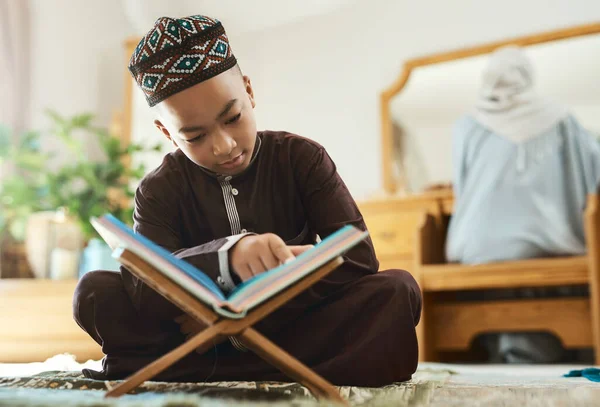
They should be encouraged to perform righteous deeds by learning prayer, reciting the Quran with humility, and remembering Allah regularly.
Parents may read encouraging and warning verses and hadiths to the child and explain them according to the child’s understanding.
Children may also be enrolled in Quran memorization circles and followed up in their progress.
Visiting places such as cemeteries or hospitals may also help children reflect on life and the Hereafter.
Teaching Good Character
Children should be raised upon honesty, trustworthiness, integrity, altruism, helping the needy, honoring guests, and other noble qualities.
They should also be taught to avoid bad traits such as lying, insulting others, and using offensive language.
Reading hadiths that encourage good character and memorizing the Quran can strengthen these values.
Teaching Children to Respect the Rights of Others
Children should learn to respect their parents’ rights. For example, they should not walk ahead of them or call them by their names without respect.
Respect should not be tied to material gifts from parents but rather to the rights that Allah has established for them.
Children should also be taught to maintain family ties, respect neighbors, teachers, friends, and elders.
They should be trained in proper social manners such as table manners, greetings, etiquette of asking permission, etiquette of gatherings, and proper speech.
Children should also be encouraged to promote good and discourage wrongdoing while overcoming shyness and fear.
Providing a good school environment, good friends, and cooperation between parents and educators is essential for raising children.
Children should also be taught self-confidence, courage, honesty, and responsibility. Their opinions should be heard, and they should gradually be given freedom to make decisions appropriate to their age.
Self-control should be encouraged, especially in controlling anger and avoiding situations that lead to frequent anger.
Teaching Respect and Discipline
Children should be protected from moral corruption and blind imitation of harmful cultural influences.
They should also be warned against listening to music and inappropriate entertainment, and their free time should be filled with beneficial activities.
Choosing good friends is extremely important.
Children should learn about the life of the Prophet (peace be upon him) and the righteous predecessors so they can follow their example.
They should study the Quran and learn essential Islamic knowledge as well as beneficial literature.
Parents should also explain the schemes of those who oppose Islam so that children grow up with awareness and understanding.
Children should feel pride in Islamic civilization and develop a desire to revive its values.
Finally, they should learn the importance of time management, discipline, and pursuing beneficial knowledge.
How can children be raised in Islam with a proper and balanced upbringing?
In the following lines, we will mention how to raise your children in Islam:
A Good Example
This is one of the most effective methods of upbringing. A child observes the behavior of his educator and learns more from actions than from words.
If a child sees his teacher forbidding something while doing it himself, how can the child stop doing that thing? Therefore, the educator should be a role model for those he is raising.
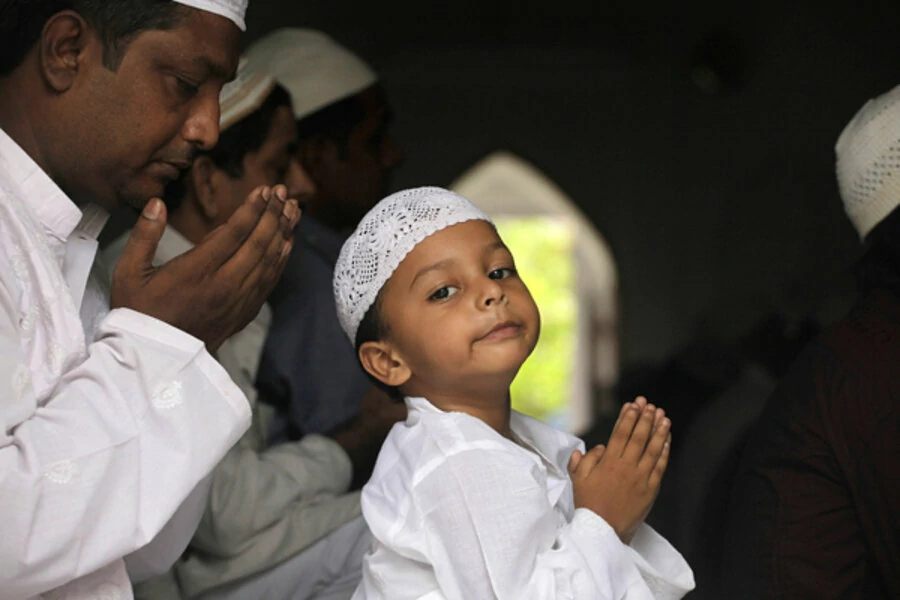
For example: when the call to prayer (Adhan) is heard, repeat the words with the caller to prayer, perform ablution quickly, and take your children with you to the prayer.
If someone calls you on the phone, do not ask your child to say that you are not at home, because this would make them accustomed to lying.
Observation and Supervision
A father should not neglect his child. Instead, he should observe and supervise him without the child noticing.
Whether the child is a boy or a girl, the parent should pay attention to their going to school and returning from it.
He should also check their books, library, drawers, and similar things.
This should be done in a very discreet manner. The purpose of observation is not excessive scrutiny, but rather avoiding negligence while keeping an eye on things from a distance without making the child feel watched.
Warning and Guidance
Children should be warned about the types of sins they might fall into.
They should also be warned about evil, the people who promote it, the reasons that lead to it, and the methods used to tempt others into it.
For example, if a father warns his daughter about responding to suspicious phone calls, she will respond properly. She should be taught to end the call immediately instead of engaging in conversation.
Memorizing the Quran
Children should be taught to memorize the Quran, along with some hadiths, supplications, and remembrances (adhkar).
They should also learn proper expressions and manners, such as what to say to their parents when they see them and how to greet a guest when one arrives.
Encouragement and Warning
At times, the child should be encouraged with kind words or a small gift.
At other times, it may be appropriate to warn or caution the child against doing something wrong.
Advice and Gentle Guidance
Parents should advise their children kindly, addressing them with affection such as “my son” or “my daughter.”
They may also tell stories that contain lessons and moral guidance.
Parents can use questions to encourage reflection, such as:
“Do you not want Paradise?” or “Are you not afraid of the Fire?”
It is also beneficial to take advantage of certain occasions and situations.
For example, when seeing large crowds, one may remind the child about the Day of Resurrection. Or if the child is happy with exam results, a parent may say:
“By the will of Allah, you will also be happy in the Hereafter as long as you obey Allah.”
However, advice should be given in moderation and without excessive lecturing so that the child does not become bored.

