
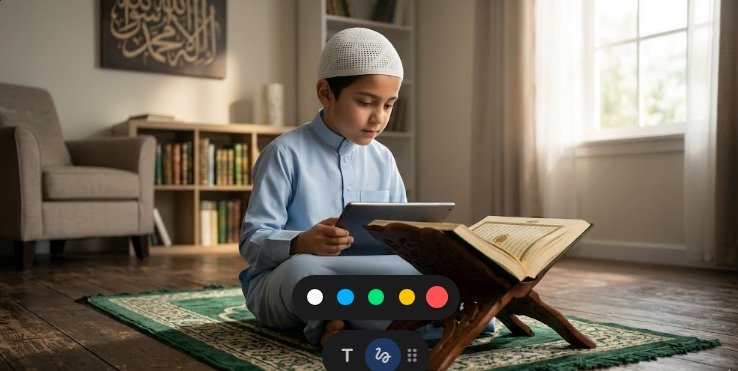
There is a moment every hafiz remembers
How to memorize Quran the first time a surah they had struggled with for days suddenly flowed out of their mouth without a single glance at the page. It feels like something shifted permanently inside you. Like that chapter now belongs to you forever.
But before that moment comes the harder work: showing up consistently, correcting mistakes gently, and building habits that hold even on the days when motivation has gone quiet.

Whether you are a complete beginner hoping to memorize your first Juz, a parent guiding your child toward becoming a hafiz, or an adult revisiting a dream you set aside years ago — this guide is for you. These are not generic tips copied from a listicle. They are the methods our teachers at Quran Oasis have used with thousands of students across the UK, USA, Canada, and Australia.
Ready to begin? Book a free trial class at Quran Oasis and start memorizing with a certified Al-Azhar teacher at a time that suits your schedule — claim your free trial here →
Why Memorizing the Quran Changes You — Not Just Your Schedule
Before we get into the how, it is worth pausing on the why. The Prophet Muhammad ﷺ said:
“The best among you are those who learn the Quran and teach it.”
(Sahih al-Bukhari)
Committing the Quran to memory is one of the highest acts of worship in Islam. But its benefits are not confined to the spiritual realm. Research in cognitive science consistently shows that memorization-based learning sharpens working memory, improves focus, and builds mental resilience. Children who memorize the Quran often develop discipline and concentration that carries into every area of their lives. Adults who take it on report a deepened relationship with the text — not just knowing the words, but feeling them.
10 Proven Tips to Help You Memorize the Quran
1. Start Smaller Than You Think You Should
One of the most common mistakes beginners make is trying to memorize too much too soon. They commit to half a page a day, manage it for a week, then burn out. A better approach: start with three to five ayahs per day. Master them completely before moving on.
Consistency beats volume every time. Ten ayahs solidly memorized and still remembered six months later are worth far more than fifty ayahs half-remembered and fading. This is why our teachers at Quran Oasis design individualized hifz plans for each student — because the right pace is not the same for everyone.
2. Choose One Mushaf and Never Switch
When you memorize from a specific physical copy of the Quran, your brain encodes more than just the words. It encodes the visual layout — where a line breaks, where the page turns, how a word sits near the margin. This spatial memory becomes a powerful retrieval cue.
Switching between different editions, fonts, or apps disrupts this process. Pick one Mushaf — ideally a Tajweed Mushaf with color-coded rules — and stay with it from the first day until the last.
3. Recite Aloud — Always
Silent reading and silent memorization are not the same thing. The Quran was revealed to be heard and recited. When you recite aloud, you activate more of your brain — auditory memory, muscle memory in your lips and tongue, and the rhythm centers that respond to the Arabic prosody of the text.
Even if you are studying late at night and cannot disturb anyone, a low whisper is far more effective than complete silence. Your mouth needs to learn these words, not just your eyes.
4. Understand What You Are Memorizing
Meaning is the glue of memory. When you understand what an ayah is saying — even at a basic level — you create hooks in your mind that make retrieval faster and more stable. Look up a simple translation and the reason behind the revelation (asbab al-nuzul) for the surah you are working on.
At Quran Oasis, our Hifz course integrates Tafseer elements precisely because students who understand the passage they are memorizing retain it significantly longer than those working purely by rote.
5. Use Spaced Repetition — Not Just Daily Review
Spaced repetition is a memorization technique grounded in decades of psychological research. The idea is simple: review material at increasing intervals over time. The day after you memorize something, review it. Then three days later. Then a week later. Then two weeks.
This mirrors what scholars have called muraja’ah — the systematic revision that prevents the Quran from leaving the memory. Many experienced huffaz divide their time between new memorization in the morning and muraja’ah in the evening. Your teacher can help you build a revision schedule that works for your current volume.
6. Pray What You Have Memorized
There is no review session more powerful than your daily salah. When you recite newly memorized ayahs in your prayer, you are testing your memory under a condition of focused attention and spiritual engagement. Mistakes become immediately obvious. Smooth passages feel deeply affirming.
Make it a practice to rotate through your recent memorization in your optional (nafl) prayers. The repetition is effortless because it is already part of your daily life.
7. Guard Your Environment
Classical scholars treated the memorization of Quran as a spiritual practice that extended far beyond the study session. They were cautious about what they consumed mentally because they understood that the Quran competes for the same cognitive and spiritual bandwidth as everything else.
This does not mean becoming a recluse. It means being intentional. In the hour before your hifz session, reduce digital noise. Start with a few minutes of istighfar. Approach the Quran with a quiet mind, and you will find the words settle into your memory far more easily.
8. Record Yourself and Listen Back
This tip is underused and incredibly effective. Record yourself reciting the ayahs you are working on, then play it back while doing something low-effort — walking, light housework, commuting. Your brain continues to process and consolidate the material even when you are not consciously studying.
Listening to your own voice also makes errors in tajweed and pronunciation immediately obvious in a way that silent reading never can.
9. Work With a Qualified Teacher
You can learn almost anything on your own these days. Quran memorization, however, has always been a teacher-to-student transmission. The Quran needs to be heard correctly before it can be recited correctly.
A qualified teacher does not just correct your mistakes. They track your progress across weeks and months. They notice when you are losing ground on an earlier surah before you do. They bring accountability that is almost impossible to manufacture on your own.
At Quran Oasis, every teacher holds an ijazah from Al-Azhar University. Our classes are one-on-one, available 24 hours a day, and designed to fit around your schedule. Explore our Hifz program here →
10. Let Your Intentions Carry You Through the Hard Days
There will be days when the words do not come. When a surah you thought you had locked in suddenly feels unfamiliar. When life gets full and your hifz session keeps getting pushed to later and then to tomorrow.
On those days, what carries you is not technique. It is niyyah — intention. Renew it. Remind yourself what you are doing this for. The Prophet ﷺ told us that the hafiz will be honored on the Day of Judgment, and that the Quran will intercede for those who recited it. You are not just building a skill. You are building a relationship.
Common Mistakes to Avoid When Memorizing the Quran
Most setbacks in hifz come from a handful of recurring patterns:
- Rushing to add new material before solidifying what you have already memorized
- Neglecting muraja’ah (revision) in favor of only moving forward
- Memorizing without tajweed — this embeds incorrect pronunciation that is hard to unlearn later
- Going too long between sessions — two days away from a new surah can set you back significantly
- Studying when mentally exhausted, which reduces retention and wastes time
- Lacking accountability — without a teacher or study partner, it is easy to skip sessions unnoticed
How Long Does It Take to Memorize the Full Quran?
This is the question almost every new student asks, and the honest answer is: it depends. Children between the ages of 7 and 14 who work with a qualified teacher and study consistently five days a week can typically complete the full Quran in 2 to 4 years. Adults working at a pace of half a page per day can complete it in 3 to 5 years.
These timelines assume regular muraja’ah alongside new memorization. Without revision, the number of surahs you have actually secured will be far lower than the number you have technically covered.
If your goal is not the full 30 Juz — if you simply want to memorize the commonly recited shorter surahs for your prayers — that goal is achievable in a matter of months. It is a worthwhile starting point and one that transforms your daily salah.
Memorizing Quran as an Adult vs. as a Child : What Changes?
Children generally have an easier time with rote memorization — their brains are in a phase of high neuroplasticity, and they are not carrying the same cognitive load as adults with jobs, families, and financial responsibilities.
But adults have real advantages too. They bring comprehension and emotional depth to the memorization process. An adult who understands the weight of a verse in Surah Al-Baqarah will retain it differently — and often more durably — than a child memorizing the same verse without grasping its meaning.
The key for adult learners is structure and accountability — which is exactly what an online hifz program provides. You do not need to go to a mosque at a fixed time. You can schedule your class at 6 AM before work, or 10 PM after the children are asleep.
Start Your Hifz Journey Today
At Quran Oasis, we match you with a certified Al-Azhar teacher, build a personalized memorization plan around your life, and support you with structured daily review from day one. Classes are available 24/7 — weekdays, weekends, and across every time zone.
Your first class is completely free.
Frequently Asked Questions About Quran Memorization
Can I memorize the Quran online?
Absolutely. Online Quran memorization has become the primary method for millions of Muslims around the world who do not have access to a local hifz school or whose schedules do not fit traditional class times. At Quran Oasis, our one-on-one online classes replicate the same teacher-student dynamic that has preserved the Quran’s transmission for over 1,400 years.
What age should a child start Quran memorization?
Many families begin at age 5 or 6 with shorter surahs and simple Arabic recognition. Formal structured hifz programs typically work best from around age 7, when children have the attention span and reading ability to engage with the material consistently. That said, there is no upper age limit — we have students who began at 50 and completed their hifz with remarkable dedication.
How many ayahs should I memorize per day?
For most beginners, 3 to 5 ayahs per day is sustainable and effective. Once your rhythm is established and your tajweed is solid, some students increase to half a page or a full page. Your teacher will advise based on your pace and how well you are retaining previous material.
Do I need to learn Arabic to memorize the Quran?
You do not need to be fluent in Arabic to memorize the Quran. What you do need is the ability to read Arabic script correctly — specifically with proper tajweed. Our Reading Quran course is designed for complete beginners and gets students to a confident reading level before they begin hifz.
Final Thoughts: One Step at a Time
Memorizing the Quran is not a race. It is a relationship that deepens with every surah you secure, every morning you return to the page, and every prayer made richer by a passage that now belongs to you entirely.
The ten tips in this guide are not secrets. They are the quiet, unglamorous fundamentals that every hafiz who has actually completed this journey will tell you about if you ask them honestly. Small sessions. Consistent revision. A good teacher. A sincere intention.
If you are ready to take the first step, Quran Oasis is here to walk alongside you. Our certified teachers, flexible scheduling, and personalized hifz plans have helped students on six continents begin — and complete — this journey.
Book your free trial class today — your first session is completely free, with no commitment required. The Quran is waiting for you.
Related Articles:
- How to Learn Tajweed Online: A Beginner’s Complete Guide
- Online Quran Classes for Kids: What Every Parent Should Know
- Tips for Memorizing Quran for Busy Professionals


Pingback: Online Quran Classes For Youth & Young Adults - Quran Oasis For Education In The United Kingdom